




















July 22
Clarks Hill water level is 323.67 (full pool is 330.00), and the lake has typical water clarity for summer: clear. Morning surface water temperatures are about 86 degrees.
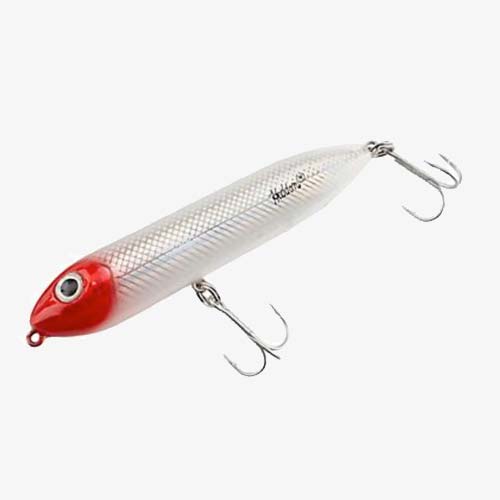
The excellent spring fishing bite patterns have changed considerably, but one trend remains consistent: quality bass are being caught at Clarks Hill Lake. Theblack bass are now solidly locked into summertime patterns, and Guide Josh Rockefeller (706-513-6152) reports he’s still fishing the shallows, but he’s doing so with topwater lures, specifically the Whopper Plopper.

Shallow water is still producing quality bass at Clarks Hill on topwater lures.
His key to this pattern is locating concentrations of bream along the shoreline, knowing that larger bass will be in the area with the intent to forage on the bream. Earlier in the summer, he was hunting the bass hanging out near bream beds, but now, although some bream bedding activity continues, he’s locating targets that simply have a lot of bream concentrated in a specific area.
Josh is working long stretches of shorelines where bream congregate, and that’s enough to attract bass. He’s working these shorelines with the trolling motor revved up, moving the boat at a fast clip.
Covering a lot of water is a key to this tactic producing enough bites, and with the clear water, he'll often see multiple bass cruising along the shoreline together, often 3 to 5 fish in a group. When he casts the topwater lure, he casts it beyond those cruising fish and works it back between them and the shoreline. That seems to trigger a competitive instinct, and the first bass to arrive mauls the bait.
Josh also noted that he’s seeing some large gizzard shad in the shallows, and that’s also a positive sign for holding bass in a specific area.
Captain Rocky Fulmer withLittle River Guide Service (706-210-3474) recently reported that the fishing for stripersand hybrids continues to be excellent. The summer pattern is stable, and he’s underway before dawn every morning, and on most mornings the action is fast and furious. In this summer pattern, he’s fishing live blueback herring on down-rods exclusively, working water depths between 20 and 100 feet, with the fish found at 20 to 60 feet.
--Terry Madewell
July 8
Clarks Hill water level is 324.43 (full pool is 330.00), and the lake has typical water clarity. Morning surface water temperatures are about 84 degrees.
Despite still experiencing low water levels and limited flow through the lake, Clarks Hill is producing excellent fishing. Captain Rocky Fulmer withLittle River Guide Service (706-210-3474) reports that the fishing for stripersand hybrids is extraordinarily good right now. He’s underway by 530 am every morning, and on most mornings, they’re counting fish by 630 am. Depending on the number of clients, Captain Rocky said that’s between 30 and 60 hybrids and stripers.
Some quality fish are being caught; a client landed a 20-pound-plus striper on a recent trip. A typical trip has mixed sizes, but Captain Rocky won’t stay on a group of small fish; he’ll move to find quality fish.

Captain Rocky is catching quality fish, as well as big numbers of hybrids and stripers.
He's fishing live blueback herring on down-rods exclusively, with water depths between 20 and 100 feet and fish found at 20 to 60 feet. Around daylight, they are usually shallower but quickly move deeper as the sun gets high. The stripers and hybrids are being caught throughout the lake, but the local hotspots are typically small targets.
He’s searching points, humps, and ledges until he marks the fish on his electronics, then drops bluebacks to them. It may take a while to find the right spot, but when you do, the bite is on fire.
Captain Rocky said the crappie fishing remains consistent on brush, with the best depths being 25 feet and deeper for quality and quantity of fish. Crappie are being caught shallower on brush in 8-20 feet, but they’re generally smaller. He’s using live Tuffy minnows fished vertically over the brush.
The catfishbite is improving as the fish are nearing the end of the spawning cycle and are locked into typical summertime patterns. Captain Chris Simpson withFightin Da Blues Fishing Guide Service (864-992-2352) reports that catfishing news is improving, and a catfishing tournament was recently won with a total of 88 pounds.
Captain Chris has only been on the water a few times recently, but what he’s seen is a strong thermocline setting up at 45-55 feet in the middle part of the lake where he’s fishing. That will limit the depth to which fish can go for extended periods.
He also noted that the water quality for fishing is not good. Very little current exists, and little fresh water is flowing through the lake. He did note that the baitfish seem to be congregated in the 25–30-foot range right now.
Captain Chris said anchoring in10-35 feet by day and 5-20 feet at night would be the best depths to work. The nighttime bite is usually excellent at this time of year, and points, humps, and ledges are good targets when forage is associated with them.
He recommends cut shad or perch for blues, and live bream or perch for flatheads. He likes to use both on his trips. For channel catfish, the smelly dip baits are productive day or night.
Terry Madewell
July 1
Clarks Hill water levels are down to 324.43 (full pool is 330.00) and the lake has typical clarity. Morning surface water temperatures are about 84 degrees.
Yesterday tournament angler Tyler Matthews of Evans, Georgia saw 89-degree water fishing in the afternoon, and so it’s unsurprising that the black bass bite is slowing down! But they are still catching fish, managing a few on a minnow-type bait that they saw on LiveScope suspended in 40-45 feet of open water and others that were on humps and brush piles in 25-30 feet of water. The fish related to cover and structure will come up to take a fluke or Sebille, but they will also eat a shaky head or jig. There is also sporadic schooling, and everything is better when there is wind. On calm days they can see fish just looking at baits while with a breeze they will take them.
There is also a good buzzbait bite around the banks, and with a big mayfly hatch you can actually catch fish all day on buzzbaits even though it slows after 9:30.
Finally, urchin-type baits are producing in open water and some people are even throwing them around the banks instead of a buzzbait.
The earlyhybrid and striped bass bite is very good, and Captain Rocky Fulmer with Little River Guide Service (706-210-3474) reports that around daylight they are usually catching their limit in 30 minutes, typically 50 or 60 fish. The fish are on the bottom in 30 feet of water on main lake points and they are taking herring on down-rods.

But after that early bite it slows way down, especially around the recent huge full moon, and it’s a real struggle to catch fish. A couple of days ago Captain Rocky caught two fish in six hours starting after 8:00!
The crappie are still on brush, and Captain Rocky reports that they are all over the lake in 25-30 feet of water. But the best fishing is on brush piles on main lake points and in main lake pockets, with the fish generally 10-12 feet down but sometimes 20 feet deep. Typically they will move deeper once a boat gets over them. Minnows are working the best right now.
Finally, on the catfish front Captain Chris Simpson with Fightin Da Blues Fishing Guide Service (864-992-2352) reports that unsurprisingly the spawn has slowed down the bite for big fish, but atypically the numbers bite for smaller fish hasn’t been very good either. Low water levels that are keeping fish out of their normal areas could be partly responsible. The best way to approach them is anchoring on points and humps and casting cut bait to a variety of depths until you narrow down where the fish want to be.
June 16
Clarks Hill water levels are still low at 324.59 (full pool is 330.00), and the lake is dingy in the backs of creeks and far up the rivers, while the main lake is clear. Morning surface water temperatures are about 81 degrees.
It’s been an outstanding spring forblack bass bite on Clarks Hill, andGuide Josh Rockefeller (706-513-6152) reports that the action is still strong, but his patterns are changing as he adapt to changing conditions. One condition is the herring spawn has essentially played out, changing his favored pattern, but he’s still working shallow water.

Guide Josh Rockefeller caught some big bass on topwater lures this past weekend.
Josh reports that while the shallow-water schooling fish bite on flukes has been strong until recently, his pattern has shifted to working the shallows with topwater lures. His key here is finding concentrations of bream along the shoreline, knowing that larger bass will be in the area, chowing down on them. He said he’s not specifically targeting bream beds. It doesn’t have to be bream beds at this time of the year because he’ll find long stretches of shorelines where bream will be congregated in good numbers, and that’s enough to attract bass. He’s working these shorelines with the trolling motor revved up, moving the boat at a fast clip.
He monitors boat speed to enable him to work his lures effectively, and his best action recently has been with the Whopper Plopper, providing strong topwater action. But covering a lot of water is a key to this tactic producing enough bites. In a tournament this weekend, he didn’t get a lot of bites, but the quality of fish he hooked was excellent. He only weighed in four fish, but had his tournament limit, the fifth fish, hooked that got off at the boat. It was easily his biggest fish of the day, he said, and losing that fish likely cost him the opportunity to win the tournament. But that’s bass fishing, he noted.
Josh also noted that he’s seeing a few large gizzard shad in the shallows, and that’s also a positive sign for holding bass.
He adds that one factor helping his spring fishing now may be the low water conditions, because the fish have fewer hiding places. And for this current pattern, where he’s burning down the banks at a fast clip, that may be aiding his success with this pattern.
And for anglers who want to catch a mess of bream, he reports plenty of big bream are still in the shallows.
June 3
Clarks Hill water levels are still low but up to 324.84 (full pool is 330.00) and the lake is dingy in the backs and way up the rivers while the main lake is clear. Morning surface water temperatures are about 79 degrees.
It’s been a pretty fantastic black bass bite recently on Clarks Hill, and Guide Josh Rockefeller (706-513-6152) reports that he and his father have managed a couple of 26-pound bags in recent tournaments! Right now it’s been all about a chartreuse fluke in 10-12 feet off points for them, but that bite must be about to play out and this month fish will have to slide out to brush deeper off the same points. Already schooling activity is slowing down, but you should be able to call them up for most of the month. The bream bed bite is also very good, and should stay that way this month. It’s hard to know exactly why the fishing is so good, but Josh suspects that with low water levels the fish are more grouped up than usual – which must be at least part of the explanation.

Right now tournament angler Tyler Matthews of Evans, Georgia is targeting a similar zone with the same bait, and he has noticed that if you get a rainy/windy day then fish will school all day – while on calm, sunny days he is having to call fish up out of brush more. Don’t be afraid to go fishing if it’s raining!
This pattern should hold well into the month, but he notes that especially later in June he likes to fish more vertical brush in 15-25 feet. Fish will sit in the top of it and wait for bait to swim by. Additionally, in June he expects fish to suspend off humps that rise to within 15-20 feet of the surface and take a variety of baits that imitate herring.
Right now Captain Rocky Fulmer with Little River Guide Service (706-210-3474) is still catching some hybrid and striped bass early in the morning throwing baits in about 15 feet of water in blow-throughs, pockets, and off the side of the river channel – often because he will hear fish flipping in the pre-dawn darkness. However, the better action is already shifting to later in the morning in 20-30 feet of water, and by the end of June most of the fishing will be about in about 30 feet on down-rods in pockets and off points closer to the river channel. Overall, the biggest shift this month will be that the bite will move later in the day and deeper.
The crappie fishing is also improving, with Captain Rocky reporting that most of the fish are on brush. Typically fish want to be over the top of the brush, but with water levels down they are hanging deeper in the brush than usual as this month they generally aim to be about 8-10 feet below the surface. While jigs will catch fish in June Rocky heavily favors minnows on Clarks Hill.
Finally, on the catfish front Captain Chris Simpson with Fightin Da Blues Fishing Guide Service (864-992-2352) reports that many of the bigger fish are occupied with the spawn but it’s a great month to fill coolers with 2-8 pound channels and 5-18 pound blues.
The best pattern is anchoring on shallow points and fan-casting rods from 5-25 feet. As usual gizzard shad, white perch, and herring are all working.
May 27
Clarks Hill water levels are still low and are at 323.57 (full pool is 330.00), and the lake is pretty clear. Morning surface water temperatures are around 73-75 degrees.
Captain Rocky Fulmer with Little River Guide Service (803-646-9711) reports that the crappie action is good and has essentially transitioned from longline trolling tactics to holding on deeper brush. But recently, the trend is definitely toward more fish holding on the brush, typical of crappies this time of the year.

Captain Rocky reports crappie action is excellent, and fish are moving deeper.
Captain Rocky reports he's fishing deeper brush at 15-20 feet, and his preferred method is using live minnows lowered to the target depth via vertical tightlines.
Anglers will find crappie holding at slightly different depths on each brush pile, so don't get locked into one single depth for the day. One target may produce at 15 feet, the next at 18 feet. He’ll typically drop the bait around the top of the brush, or just beside it, for the best results.
He has on board, but doesn’t typically use the Forward-Facing Sonar (FFS) for casting jigs on these trips. He’ll use FFS to spot the brush and fish, enabling him to help anglers fine-tune depth presentations to target fish. As an example, if the crappie isn’t moving up for a minnow, he’ll have the anglers drop the bait an additional foot or two, and that often results in an immediate bite.
As always, depth control is crucial for catching crappie.
The catfish action has been very consistent on Clarks Hill Lake, and Captain Chris Simpson with Fightin Da Blues Fishing Guide Service (864-992-2352) reports that it should continue to be good, but the spawn will be underway soon and may slow the bite on big fish to some extent.
Captain Chris said the blue catfish have been on a very good bite, but he's catching plenty of channel catfish and a few flatheads. He expects the blue to begin the spawning soon, but they don’t all spawn at the same time, and by fishing different areas of this big lake, he can stay on good fish consistently.
Right now, the bite is ranging from deep water, as deep as 65 feet, but in low light times, a good bite is found in water 5-10 feet deep. This shallow water bite is actually where he’s catching the biggest fish. On a recent trip, he saw herring still running the banks in the mid-lake area, so the catfish have good reason to be on a good shallow water bite.
His favored baits remain cut herring, bream, perch, and gizzard shad. If he’s targeting channel catfish, shrimp, and stink baits are getting plenty of bites.
May 12
Clarks Hill water levels are down even more to 323.03 (full pool is 330.00), and the lake is pretty clear. Morning surface water temperatures remain around 70 degrees.
Captain Rocky Fulmer withLittle River Guide Service (803-646-9711) reports the hybrid and striped bass action is excellent on Clarks Hill Lake, with hybrids and stripers both being caught in good numbers. The best action right now is in the upper portion of the lake, but as the spawning efforts for both species are about over, they’ll begin to migrate throughout the lake in the next few weeks.

Hybrids and stripers are providing excellent action for Captain Rocky right now.
Captain Rocky said he’s catching a few big stripers right now, and plenty of hybrids in the 4-8-pound class. Anglers are catching fish in two ways. One: the early-morning bite is best on shallow flats or points near deep water; later, once the sun crests the horizon, the fish leave the shallows and move to points and humps in deeper water. He's catching more fish with down rods in 15-20 feet of water when the fish leave the shallows. Blue back herring is the best bait for either tactic.
The early morning bite is best if anglers get out while it’s still dark. Captain Rocky anchors on a hump in 6-10 feet of water before daylight. He’ll cast bait around the boat, fishing live herring on the bottom. Then he’ll move when the bite slows at sunup, and he’ll find the fish by targeting deeper points, humps, and ledges, for the remainder of the trip. Stripers and hybrids are typically in water 15–20 feet deep, suspended over water 30 feet deep.
He said that using freelines behind the boat is still productive when using down rods, because in clear water, stripers or hybrids will readily move up from deeper water to take a live herring.
Terry Madewell
April 29
Clarks Hill water levels are down even more to 323.18 (full pool is 330.00) and the lake is pretty clear. Morning surface water temperatures are about 70 degrees.
While Guide Josh Rockefeller (706-513-6152) reports that there are some big bags of black bass winning recent tournaments, most people report that fishing is pretty tough. That’s even though the herring spawn is still going on, but it seems as if in some areas the fish are already sliding deeper and in other areas they are around herring but won’t eat lures. Sometimes that’s true even when they are schooling on bait!
In May Josh looks for there to continue to be a herring spawn bite although it will become more of an early phenomenon, but then later in the day and further into the month the fish will push deeper. Bass should start to get out on brush in 10-20 feet of water, although with low water levels there may be less of this cover to go around. Josh also looks for a bream bed bite this month where he will fish a Whopper Plopper in protected coves and around bank cover.
Tournament angler Tyler Matthews of Evans, Georgia also notes that the herring fish are getting harder to trick, especially on calm days, and he thinks that has something to do with the fact that by this stage of the spring they have seen almost every lure in the tacklebox. That will get even worse in May. He also notes that the low water levels will really affect the May bite because fish typically like to transition out to humps as they move deeper, but most of these have very little water on them. He expects to be fishing a buzzbait a lot in May.
Right now Captain Rocky Fulmer with Little River Guide Service (706-210-3474) is still catching hybrid and striped bass throwing out baits in 6-8 feet of water of water on main lake points, and then pulling planer boards after that. However, when water temperatures hit about 72 degrees then he expects that bite to change significantly. There could still be some early bite shallow, but the predominant pattern will be fishing down-rods off points in about 20 feet of water. This pattern should hold through the end of May.
While you can still catch some Clarks Hill crappie trolling, Captain Rocky reports that the bite is starting to mostly be around brush. For now the action is a little finicky, and weather and fronts will slow the bite and move the fish shallower or deeper.
In May it should be almost exclusively a brush bite, although this year things will be a little different than usual. Especially early in the month fish want to be around the top of the brush, and with water levels almost 10 feet down they are likely to be significantly higher in the water column than in years when the lake level is higher. For example, this year they might be 8-10 feet below the surface over brush that is now in 20 feet – while at full pool they might be 16-18 feet down over the same brush. Note that as the month progresses they generally sink lower in the brush.
Finally, on the catfish front Captain Chris Simpson with Fightin Da Blues Fishing Guide Service (864-992-2352) reports that the fish continue to bite well but he thinks the action should be about to get better. May is usually pretty good, and most bigger blues will be in pre-spawn and some will be spawning. Mussels are a big part of their diet during this time because they are an easy meal to allow them to feed up before spawning. So, mussel beds are good areas to fish. Most points and shallow humps have mussel beds so anchoring on those are the most consistent places – target 2-15 feet of water, with the shallow end most effective at night.
It's also a good time to fill coolers with 1-15 pound blues and channels as they will be in the same areas. Use bait according to what you're going after. Dip baits, shrimp, and herring for smaller fish and cut gizzard shad, white perch, and bream for bigger fish. Flatheads can also be caught in the same areas but live bream and perch will increase your chances.

April 23
Clarks Hill water levels are very low at 323.47 (full pool is 330.00) and the lake is pretty clear. Morning surface water temperatures are about 71 degrees.
While Guide Josh Rockefeller (706-513-6152) reports that the herring spawn fishing is wide open right now, that doesn’t mean the black bass are always easy to catch. On weekdays practicing they can usually whack them shallow off the points, but the pressure on weekends means the bait and fish don’t always act the same – and it’s harder to get the timing right when there is a carousel of boats circling through the same points. Some of the better tournament bags have actually come a little deeper off the points, especially when there is no wind, fishing in 7-8 feet of water when fish aren’t schooling.
A secondary pattern right now, which is sometimes a top pattern, is looking for fish that are up shallow feeding on bream. Note that with the water so low the fish don’t really have cover like willow bushes to hide in so you will often see them cruising.

There’s no change in the way Captain Rocky Fulmer with Little River Guide Service (706-210-3474) is approaching the hybrid and striped bass bite, but he does note that after the early bite in 5-8 feet of water on main lake points it gets a lot tougher. They are still pulling free-lines and planer boards in about 25 feet of water once the sun is up, but he notes that even if you mark fish deeper they want to come up to eat and so they are fishing everything weightless.
The Clarks Hill crappie are also still all over brush, but Captain Rocky notes that with the water so low they are often just 5-8 feet below the surface. The fish will be scattered all the way to the bottom, but if you don’t fish above them it spooks them.
Finally, on the catfish front Captain Chris Simpson with Fightin Da Blues Fishing Guide Service (864-992-2352) reports there is still a decent bite anchoring on humps and main/ secondary points with mussel beds in 5-15 feet of water.
Additionally, dragging feeder creeks that are clean enough to allow it in 5-25 feet is productive.
As always a variety of baits will catch fish, with larger, tougher baits like gizzard shad or perch generally getting less bites but overall bigger fish than softer baits like herring.
April 16
Clarks Hill water levels are at 323.60 (full pool is 330.00) and the lake is pretty clear. Morning surface water temperatures are about 72 degrees.
It’s a pretty straight-forward black bass report this week, and tournament angler Tyler Matthews of Evans, Georgia reports that while there are other ways to catch fish most people are thinking about schooling fish on herring points. While the best bite is sometimes early right now fish can be caught on certain spots all day this way, and in the best conditions (with wind and sun) they can be caught all day in a lot of places. So far this season Tyler hasn’t seen a clear preference from the fish and so he alternates throwing a topwater, fluke, and a hard swimbait.
Tyler notes that on the next full moon shellcracker should spawn and a good buzzbait bite should develop around the banks, and you can already catch fish on humps in 15-20 feet with a Carolina rig, drop shot, shaky head, etc. He just isn’t interested in fishing that way right now.
Unsurprisingly there is also a fantastic hybrid and striped bass bite, and Captain Rocky Fulmer with Little River Guide Service (706-210-3474) reports that he is wearing out the fish early throwing live bait on the bottom to main channel points in about 6 feet of water. He doesn’t believe the herring spawn is wide open yet, but the fish are up there and it’s about to be. After that early bite the striper usually go deeper and pulling free-lines and planer boards across points and humps is the best pattern.
Captain Rocky notes that in filling out a 40-fish limit they usually also catch 5-10 spots and largemouth as well as a couple of catfish.

The Clarks Hill crappie spawn is pretty much over, and Captain Rocky reports that fish are returning to brush. The depth of the brush doesn’t seem to matter a whole lot, but you can’t go wrong with brush in 20 feet – although the fish could only be 5 feet under the surface. You can still troll some but you pretty much have to troll near brush.
Finally, on the catfish front Captain Chris Simpson with Fightin Da Blues Fishing Guide Service (864-992-2352) was on the water yesterday and notes that he found a decent bite anchoring on humps and main/ secondary points with mussel beds in 5-15 feet of water.
Additionally, dragging feeder creeks that are clean enough to allow it in 5-25 feet is productive.
As always a variety of baits will catch fish, with larger, tougher baits like gizzard shad or perch generally getting less bites but overall bigger fish than softer baits like herring.
April 3
Clarks Hill water levels are at 323.53 (full pool is 330.00), and the lower portion of the lake is clear. Beginning a few miles upstream from the dam, some dingy water is found, but almost nowhere is muddy. Morning surface water temperatures are about 66 degrees.
Plenty of excellent fishing opportunities are happening at Clarks Hill Lake, butGuide Josh Rockefeller (706-513-6152) said it's the absolute best time of the year to be bass fishing on this lake. Josh said the key to shallow-water bass action is that the herring spawn is underway, and that favored forage is a huge draw for bass. Working the points with several different lures can be productive; the key is finding points with herring on them. While the herring typically spawn at night, they still linger around the points, improving the odds of bites throughout the day. But the early-morning bite can be awesome, and Josh recommends lures like Flukes, Sebile’s, or anything that imitates herring. The spawning action is underway, with the full moon and warm weather ideal for spawners to move in. He’s working a one-half ounce jig with brown, live rubber with a trailer for spawning fish. It’s a different spawn bite than most years with the clear, lower water levels, so some of the beds are deeper than usual. For the best herring spawning points, Josh said to target the lower end of the lake, but up lake, the water is a bit dingy if anglers are keying on spawning bass. But bass fishing is on fire throughout the lake.
Not much has changed on thecatfish front, Captain Chris Simpson withFightin Da Blues Fishing Guide Service (864-992-2352) reports that the blues are moving shallower with warming temperatures, and flatheads are getting more active. But this weekend the warming water should provide better action for both species. Anchoring on humps and points with an abundance of rocks and/or timber is working well. Live bream and perch will put you in the game for catching both species, and even larger channel cats.